



In a world where most business communication happens through screens, receiving something physical can feel surprisingly memorable. A well-designed business card, postcard, flyer, or thank-you note can give customers something tangible to associate with your brand.
Print materials are particularly valuable when they are treated as part of the overall brand experience rather than simply as pieces of paper. The right combination of typography, imagery, colors, paper quality, and messaging can make even a small printed item feel professional and distinctive. MOO offers customizable print products including business cards, postcards, flyers, brochures, stickers, stationery, greeting cards, and promotional products.
Start With a Clear Brand Identity
Before designing any printed material, think about what you want people to remember about your business. A strong visual identity makes it easier to create consistent materials across different marketing channels.
Your logo is only one part of that identity. Colors, fonts, photography, tone of voice, and graphic elements can all contribute to how customers perceive your brand.
MOO allows customers to customize products using their own designs or available templates, making it possible to create printed materials that reflect an existing visual identity.
If your business already has brand guidelines, use them as the foundation for your print designs. Keeping the same colors and typography across business cards, flyers, packaging inserts, and stationery can make your company appear more established.
For a new business without formal guidelines, start with a small number of consistent elements. Two or three brand colors and one or two complementary fonts may be enough.
Think about your target audience as well. A creative studio may benefit from bold visual choices, while a professional consultancy might prefer a cleaner and more restrained design.
The goal is not to make every printed product identical. Instead, create a recognizable visual connection between them.
A customer should ideally be able to see a postcard or business card and immediately associate it with your business.
Consistency creates familiarity, and familiarity can make your brand easier to remember.
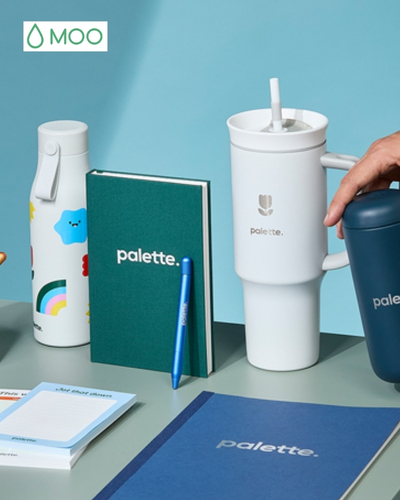
Make Business Cards Work Harder
Business cards may be small, but they can play an important role in networking and customer relationships. A good card should make it easy for someone to remember who you are and how to contact you.
Avoid filling every available space with information. Include the details that are genuinely useful, such as your name, role, company, website, email address, phone number, or relevant social profile.
MOO offers business cards in multiple sizes, paper stocks, and special finishes, including options such as Spot Gloss, Gold Foil, and Silver Foil.
One particularly interesting option is the ability to use different designs on individual cards through its Printfinity feature. This can be useful for creatives, photographers, designers, or businesses that want to showcase several images or concepts.
Think carefully about the impression you want your card to create.
A minimalist layout can communicate professionalism, while strong photography or illustration can help creative businesses demonstrate their personality.
The physical feel also matters. A thicker or textured paper stock can make a card feel more substantial when someone receives it.
However, premium finishes should support the design rather than distract from it.
Before ordering a large quantity, consider testing different layouts, colors, and paper options.
A small sample can help you evaluate how your design actually looks and feels in physical form.
Use Postcards as More Than Traditional Mail
Postcards are often associated with personal messages, but businesses can use them for a wide range of marketing purposes.
They can promote an upcoming event, introduce a new product, announce a special offer, encourage repeat purchases, or serve as an insert in a package.
MOO offers postcards in several sizes, paper stocks, and finishes, including Original, Super, Luxe, and Foil options.
Because postcards provide space on both sides, they can combine a strong visual with a clear message.
For example, one side could focus on an attractive product image while the other provides a short offer and a call to action.
The key is to keep the message focused.
A postcard should communicate one primary idea rather than attempting to explain everything about your business.
If you are promoting a new product, highlight the product. If you are inviting customers to an event, make the event details immediately visible.
You can also use postcards as packaging inserts. A simple thank-you message can make an online order feel more personal.
For businesses with physical locations, postcards can be used to promote local events or special offers.
Their versatility makes them useful for both established companies and smaller businesses experimenting with offline marketing.
The physical nature of a postcard also gives your message an opportunity to stand out from the digital advertisements people encounter every day.
Turn Packaging Into a Brand Experience
The customer experience does not end when someone completes a purchase. For online businesses, the moment a package arrives can become an important branding opportunity.
Small printed elements can make packaging feel more thoughtful without requiring an elaborate redesign.
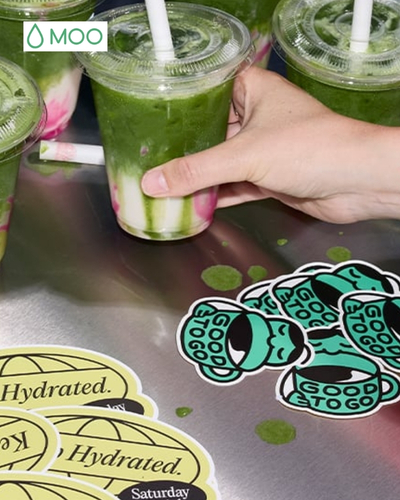
MOO offers stickers and labels that can be customized for branding, packaging, and other creative uses.
A branded sticker can be used to seal tissue paper, decorate a box, identify a package, or add a recognizable visual element.
You can also include a printed thank-you card or postcard inside an order.
Keep the message natural rather than turning every insert into an advertisement.
A simple “thank you for supporting our business” can sometimes feel more genuine than a page full of promotional information.
If you want customers to return, you can include a carefully chosen incentive or invite them to explore another part of your business.
QR codes can also connect physical materials with digital experiences. A customer can scan a code to visit a website, view a product collection, join a loyalty program, or access additional information.
Make sure the destination is mobile-friendly because most customers will scan from a phone.
Packaging provides an opportunity to reinforce your identity at a moment when the customer is already interacting with your brand.
Even small details can contribute to a more memorable experience.
Choose Print Materials According to Your Goal
Not every business needs the same printed products. The best choice depends on what you want the material to accomplish.
MOO provides a broad selection of customizable print products, including business cards, postcards, flyers, brochures, stickers, letterheads, greeting cards, envelopes, invitations, and more.
If the goal is networking, business cards may be the natural starting point.
For a local promotion, postcards or flyers may be more useful.
For a detailed business presentation, brochures can provide additional space for information and imagery.
For customer communication, personalized notecards or letterheads can create a more professional impression.
Promotional products can also extend your brand beyond traditional paper materials.
Before ordering anything, ask yourself three simple questions: Who will receive it? What should they remember? What action should they take afterward?
These questions can prevent unnecessary printing.
For example, if you want potential customers to visit your website, make the website address or QR code easy to find.
If the goal is simply to introduce your brand, focus on memorable visuals and a concise message.
The more clearly you define the purpose, the easier it becomes to select the right product.
You can also test different formats and measure which ones generate the strongest response.
Make Quality Part of Your Marketing
Good design can attract attention, but physical quality can influence how people perceive the business behind it.
Paper thickness, texture, finish, color reproduction, and printing quality all contribute to the final experience.
MOO offers different paper stocks and finishes across its product range, including premium options designed to give printed materials a distinctive physical feel.
That does not mean every business needs the most expensive option.
Instead, choose quality based on the purpose of the material.
A premium business card may make sense for a consultant who frequently meets potential clients, while a simple flyer for a short-term promotion may not require an elaborate finish.
Sustainability can also be part of the decision. MOO states that many of its paper products use FSC-certified or sustainably sourced paper.
Ordering a sample pack can be helpful when you are uncertain about paper stocks or finishes. Seeing and touching different options gives you a better idea of how the final product will look than viewing them only on a screen. MOO currently promotes free sample packs for customers who want to explore its print range.
Always proofread your designs before placing an order.
Check names, phone numbers, email addresses, website details, dates, prices, and QR codes.
A beautifully printed mistake is still a mistake.
Take time to review the final design from the customer’s perspective before approving it.
Physical marketing remains valuable because it creates an experience that digital communication cannot completely reproduce. A business card can be kept in a wallet, a postcard can sit on a desk, and a branded package can create an immediate impression when it arrives.
MOO provides a wide range of customizable print products that can help businesses, freelancers, creators, and individuals express their ideas through professionally printed materials.
The most effective approach is to start with your brand identity and decide what you want customers to remember.
For networking, focus on business cards that are easy to read and visually distinctive. For promotions, postcards and flyers can communicate a focused message. For online businesses, stickers, inserts, and thank-you cards can make packaging feel more personal.
Do not underestimate the importance of physical quality. Paper, finishes, and printing can influence how a customer experiences your brand.
At the same time, premium does not automatically mean better. Choose materials according to the purpose of the project and the audience receiving them.
It is also worth testing your designs before ordering in larger quantities. Samples can help you see how colors, typography, photographs, and finishes actually appear in physical form.
Most importantly, keep your message simple. Every printed item should have a clear purpose, whether that is introducing your business, promoting an offer, thanking a customer, or encouraging someone to take the next step.
When design, quality, and purpose work together, print becomes more than a marketing expense. It becomes a physical extension of your brand—something customers can see, touch, keep, and remember.