



Professional networking plays an essential role in building relationships, discovering opportunities, and developing successful careers. Whether attending business conferences, meeting potential clients, or introducing yourself to new colleagues, making a memorable first impression can influence future opportunities. Traditional paper business cards have served this purpose for decades, but they can become outdated, misplaced, or inconvenient to manage. Blinq introduces a modern alternative through customizable digital business cards, contact-sharing technology, and professional networking tools.
Digital networking allows professionals to share contact information instantly while maintaining an updated professional identity. Instead of repeatedly printing new cards, users can manage their details through a digital profile. This approach can support freelancers, entrepreneurs, employees, and growing businesses seeking more efficient ways to connect.
1. Create a Professional Digital Business Card That Reflects Your Identity
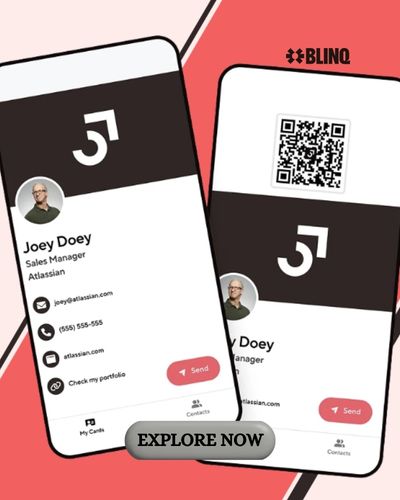
A professional introduction should communicate important information clearly while reflecting individual personality and credibility. Digital business cards provide an opportunity to present contact details in a convenient, interactive format. Blinq allows users to create personalized business cards containing names, job titles, phone numbers, email addresses, websites, and social media profiles.
Unlike traditional printed cards, digital profiles can be updated whenever professional information changes. Someone starting a new position or changing contact details can modify their profile without ordering replacement cards.
Users can also include photographs, company branding, and relevant professional links to create a more complete introduction.
This flexibility can be particularly valuable for freelancers managing several professional activities or entrepreneurs representing different businesses.
A carefully designed digital card should remain visually organized and easy to understand. Including too many unnecessary details may distract recipients from important information.
Professionals should prioritize accurate contact information, relevant links, and a clear description of their role.
A consistent digital identity can strengthen professional credibility while making future communication more convenient.
2. Share Contact Information Instantly Through Multiple Digital Channels
Networking opportunities often happen unexpectedly during conferences, meetings, social gatherings, and everyday conversations. Having contact information readily available helps professionals respond confidently whenever an opportunity arises. Blinq supports several sharing methods, including QR codes, digital links, smartphone widgets, NFC accessories, and mobile wallet integrations.
QR code sharing allows another person to scan a digital card using a compatible smartphone. This method is particularly convenient during exhibitions and professional events.
Digital links provide another practical option for sharing contact information through messages, emails, and online conversations.
The platform also supports Apple Wallet and Google Wallet, helping users access their cards without repeatedly searching through applications.
NFC business cards introduce a physical element to digital networking. Compatible smartphones can open a linked profile when brought near the card.
Recipients generally do not need to install the application to view shared contact details.
These options allow professionals to select the sharing method that best suits the situation.
Convenient information exchange can reduce unnecessary delays and help conversations continue beyond an initial introduction.
3. Build Stronger Business Relationships with Organized Contact Management
Successful networking involves more than collecting names and exchanging contact details. Maintaining meaningful relationships requires remembering conversations, understanding professional interests, and following up at appropriate times. Blinq includes contact management and lead capture features designed to help users organize information about people they meet.
Professionals can save contact details and add notes or tags that provide useful context for future communication.
For example, someone attending a marketing conference might record a potential client’s business interests or topics discussed during an introduction.
These details can make follow-up messages more relevant and personalized.
The platform also offers contact scanning and AI-assisted enrichment capabilities through eligible plans and features.
Such tools can help reduce repetitive data entry when collecting information from business cards, event badges, or other supported sources.
However, automatically collected information should still be reviewed for accuracy.
Users should also respect privacy expectations when recording personal details or sharing contact information.
Organized networking encourages more thoughtful communication and helps transform brief introductions into potentially valuable professional relationships.
4. Strengthen Company Branding with Consistent Digital Business Cards
For businesses, professional identity extends beyond logos, websites, and promotional materials. Every employee interaction contributes to how customers and partners perceive an organization. Blinq provides business-focused features that help companies manage digital cards, branding elements, and employee contact information through centralized tools.
Organizations can create consistent card templates incorporating approved colours, logos, and company information.
This approach can help maintain a recognizable brand identity across sales teams, customer service departments, and other professional roles.
Administrative controls allow authorized managers to oversee selected profile details and update shared branding elements.
When employees join or leave an organization, centralized management can simplify the process of creating or disabling company cards.
The platform also supports branded email signatures and virtual meeting backgrounds, extending visual consistency across additional communication channels.
These features may be useful for organizations that frequently interact with clients through email and video meetings.
Businesses should evaluate administrative permissions, employee training requirements, and subscription options before implementing company-wide systems.
A coordinated digital presence can make professional communication appear more organized while supporting consistent brand recognition.
5. Improve Sales Networking with Lead Capture and CRM Integrations
Sales professionals frequently meet potential customers at exhibitions, conferences, product demonstrations, and networking events. Collecting contact information is important, but converting introductions into meaningful business opportunities requires organized follow-up. Blinq offers lead capture capabilities and integrations with customer relationship management platforms to support more efficient networking workflows.
Compatible integrations include widely used business tools such as Salesforce, HubSpot, Microsoft Dynamics, and other supported systems.
These connections can help organizations transfer contact information into existing sales processes without relying entirely on manual data entry.
The platform also offers AI-assisted note-taking and contact enrichment features through applicable subscription arrangements.
Sales representatives may use these capabilities to preserve conversation context and identify appropriate next steps.
For event organizers and business development teams, structured lead information can support more effective post-event communication.
However, successful networking still depends on genuine conversations, appropriate timing, and relevant follow-up messages.
Businesses should also establish clear procedures for handling contact information and obtaining necessary consent.
Combining organized contact management with thoughtful relationship-building can improve the efficiency of professional sales activities.

6. Choose Flexible Plans for Personal and Business Networking Needs
Different professionals require different networking tools depending on their responsibilities, communication habits, and organizational needs. A freelancer may need a simple digital card, while a growing company might require branding controls and contact management integrations. Blinq offers Free, Premium, Business, and Enterprise options designed for different levels of usage.
The free plan allows individuals to create digital business cards and share them through supported methods without purchasing a traditional printed card.
Premium features provide additional customization and advanced contact management capabilities for users seeking greater flexibility.
Business subscriptions introduce team management, organizational branding, and integrations suited to professional workflows.
Enterprise arrangements provide additional administrative and security options for larger organizations.
Before selecting a plan, customers should compare available features, billing terms, user limits, and potential additional charges.
Some advanced capabilities may require separate usage-based payments or specific subscription levels.
Digital business cards can also reduce the need for repeated paper printing, particularly when professional details change frequently.
Nevertheless, physical cards may remain useful in situations where digital access is inconvenient.
Choosing the right combination of tools depends on practical networking requirements rather than adopting every available feature.
Professional networking continues to evolve as digital communication becomes increasingly important in business and everyday life. Blinq combines customizable digital business cards, convenient sharing methods, contact management, company branding, and advanced networking tools within one platform. Whether introducing yourself at a conference, building relationships with clients, or managing employee contact information, digital cards can make professional interactions more convenient. By maintaining accurate profiles, organizing contacts responsibly, and following up thoughtfully, individuals and businesses can create more meaningful connections. Ultimately, successful networking is not simply about exchanging information but developing relationships that continue long after the first meeting.