1. Building Customer Trust Through Reliable Email Communication
Trust is one of the most important elements of a successful business relationship. Customers expect companies to provide accurate information, respond to enquiries, confirm transactions, and communicate important updates without unnecessary delays. Email plays a significant role in these interactions because it connects businesses with customers throughout different stages of their journey.
From account registration confirmations to order notifications and promotional newsletters, companies depend on email to deliver information that matters. However, communication becomes less reliable when businesses work with outdated or inaccurate contact details. Incorrect email addresses can lead to bounced messages, interrupted workflows, and missed opportunities to connect with customers.
Maintaining a healthy email database is therefore an important part of professional communication. Businesses need a way to identify problematic addresses, organise contact information, and monitor the quality of their sending practices.
ZeroBounce provides email verification and deliverability solutions that help organisations improve their email communication processes. Its services include bulk email validation, real-time verification, email scoring, Email Finder, inbox placement testing, and sender reputation monitoring. These tools can help businesses understand the condition of their contact databases and identify potential issues before sending important campaigns.
For companies that communicate with hundreds or thousands of customers, accurate contact information can make everyday operations easier. A more organised email system also helps marketing and customer support teams focus on providing relevant information instead of repeatedly dealing with delivery problems.
2. Reducing Communication Gaps with Accurate Email Addresses
Every business wants its messages to reach the right people. Yet email databases naturally change as customers switch providers, abandon old accounts, or update their contact information. New registrations can also contain spelling mistakes, incomplete details, or temporary email addresses.
These problems may appear minor when a company has only a few contacts. However, they can become more significant when a business sends campaigns to a large audience. A high number of invalid addresses may increase bounce rates and make it harder to maintain consistent sending practices.
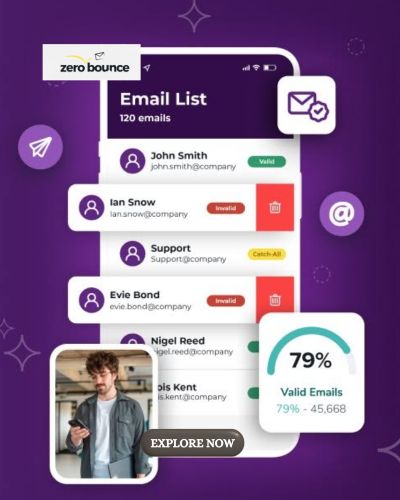
The verification technology offered by ZeroBounce helps businesses examine email addresses and identify different categories of potentially problematic contacts. Its system checks whether addresses appear valid and provides classifications that help users understand which records may need attention.
The service can identify invalid addresses, disposable emails, spam traps, abuse-related addresses, and other verification results. It also provides catch-all detection, which is useful when a receiving server accepts messages for multiple addresses without confirming whether individual mailboxes exist.
Businesses can use bulk verification to review an existing database or validate individual addresses when needed. This flexibility makes the platform relevant to organisations with different contact management requirements.
Regular verification can also improve internal organisation. Marketing teams can separate problematic records, review older subscriber lists, and prepare cleaner databases for upcoming campaigns. Although verification cannot guarantee future delivery, it helps businesses identify avoidable data-quality problems.
3. Supporting Personalised Campaigns with Better Contact Data
Personalisation has become an important part of modern marketing. Customers are more likely to appreciate messages that reflect their interests, previous interactions, and specific requirements. Businesses therefore use segmentation to organise audiences and deliver different messages to different groups.
For example, an online fashion store might send separate updates to customers interested in casual clothing, accessories, or seasonal collections. A software company may create different email journeys for trial users, existing subscribers, and people exploring its services. These strategies depend on organised customer records and reliable communication channels.
Before businesses can make the most of segmentation, they need to maintain accurate contact information. Incorrect or outdated addresses can create unnecessary delivery problems and make campaign management more complicated.
ZeroBounce supports this process through its verification and email scoring capabilities. By identifying invalid and potentially risky addresses, businesses can improve the quality of the contact records used in their marketing activities. Email scoring offers additional insight that can help users assess contacts and organise their communication efforts.
The platform also includes Email Finder, which can help professionals identify business email addresses when developing relevant B2B outreach activities. This can be useful for sales teams, agencies, and companies researching potential business connections.
However, personalisation should always be based on appropriate data collection and responsible marketing practices. Businesses must respect customer preferences, maintain proper consent records, and ensure that their messages remain relevant. Reliable contact information is only one part of creating a positive customer experience.
4. Managing Email Infrastructure and Protecting Sending Reputation
A reliable email system requires attention to both contact quality and technical configuration. Even when a business has a clean subscriber database, incorrect authentication settings or reputation problems can affect how messages are handled by mailbox providers.
Email authentication technologies help receiving servers evaluate whether a message is authorised to use a particular domain. SPF, DKIM, and DMARC each contribute to this process in different ways. Businesses that send regular newsletters or transactional emails should understand how these technologies work and ensure their configurations are maintained correctly.
ZeroBounce offers tools that support several aspects of email infrastructure management. Its email server testing service helps users examine technical settings, while DMARC monitoring provides information about authentication reports and domain activity.
Blacklist monitoring is another useful feature. If a sending domain or IP address appears on a relevant blacklist, businesses may experience difficulties with email delivery. Monitoring can help identify potential listing issues so that teams can investigate the cause and take suitable action.
The platform also provides inbox placement testing, allowing businesses to evaluate where their messages may arrive across supported mailbox providers. This can provide useful information when reviewing campaign performance or testing changes to email content and infrastructure.
For organisations working with new sending domains, email warmup is another available service. It supports the process of developing sending activity over time. Businesses should still follow responsible sending practices, use proper authentication, and focus on relevant communication rather than relying on any single deliverability tool.
5. Choosing the Right Services and Exploring Available Savings
The requirements of a small business are different from those of a large marketing agency. Some organisations only need to verify their contact lists before occasional campaigns, while others require regular validation, API access, and continuous deliverability monitoring. Choosing a suitable pricing structure can help businesses manage costs while accessing the services they genuinely need.
The free account from ZeroBounce provides a useful starting point for eligible users. Accounts registered with a business or premium domain include 100 email verification credits each month. The free offering also provides 10 Email Finder queries, one inbox placement test, one email server test, and one blacklist monitor scan. These allowances allow businesses to explore several features before deciding whether they require additional capacity.
For larger contact databases, the pay-as-you-go option offers verification credits without requiring a regular subscription. Published pricing starts at $39 for 2,000 email verification credits, with different rates available when purchasing larger quantities. This arrangement may suit companies that only need to clean their databases occasionally.
Businesses looking for a broader package can explore ZeroBounce ONE™. The bundled subscription combines verification and scoring credits with access to additional deliverability tools. Its advertised starting price is $99 per month, and annual billing provides a 20% saving on the listed monthly subscription price, subject to the plan’s terms.
The best option depends on expected usage, required features, and the number of addresses a business processes. Before purchasing, users should review the official pricing information, credit allowances, renewal conditions, and any applicable promotions.
Taking time to compare the available options can help organisations avoid paying for unnecessary services while ensuring they have enough capacity to manage their email operations.
6. Creating a More Dependable Communication Strategy for the Future
As businesses expand, their communication requirements become more demanding. A growing subscriber base, additional marketing channels, and more complex customer journeys can make email management difficult without a consistent process. Maintaining contact quality and monitoring deliverability should therefore be treated as ongoing business activities.
Companies can start by reviewing their existing databases and introducing verification checks wherever new addresses are collected. They can also establish regular cleaning schedules, monitor sending performance, and review authentication settings. These steps help create a more organised approach to managing customer communication.
ZeroBounce offers a collection of tools designed to support these activities, from email verification and scoring to Email Finder, inbox placement testing, server testing, and reputation monitoring. Businesses can explore individual services or consider a broader package depending on their operational requirements.
Another important part of long-term email management is respecting customer privacy. Validating an address does not automatically provide permission to send promotional messages. Organisations should obtain appropriate consent, follow applicable data protection regulations, protect customer information, and make it easy for recipients to unsubscribe.
For marketing professionals, agencies, online retailers, and growing companies, better email management can support more reliable communication and improve the organisation of everyday marketing tasks. The key is to combine accurate contact data with relevant content, responsible sending behaviour, and regular performance reviews.
Visit the official website to explore the available tools, compare pricing options, and discover which services fit your business requirements. A well-maintained email system can become a valuable foundation for stronger customer relationships and more consistent digital communication.